
- Enquiries
- Contact form
- /in/lukecoupe
Independent · Tied to no programme, bank or developer
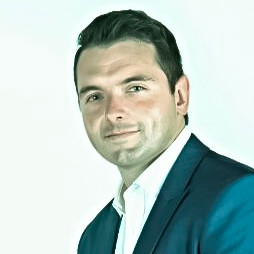
Luke D. Coupe
Chartered Wealth Manager and investment migration adviser
Almost none of my clients are planning to emigrate. They want the option — a second residency the family can use if circumstances change, and freedom of movement that does not depend on a single passport. My job is to work out whether that option is worth its price, which route delivers it most cheaply, and how to fund it without dismantling a portfolio to do so.
Most of this market is unregulated and commission-driven. A consultant paid by the programme they recommend cannot tell you the programme is wrong for you, and will not compare it against a cheaper route that pays them nothing. I work the other way round: paid by the client, tied to no provider, and qualified in the part of the decision that carries the money.
Qualifications
None of these are required to sell you a golden visa.
That is the point. Investment migration consultancy is unregulated in most jurisdictions, so the qualification bar is zero and most of the market clears it comfortably.
- MSc Wealth Management, CISI Level 7 (RDR)CISI, United Kingdom
- MSc Global FinanceCity, University of London
- Postgraduate Diploma, Financial PlanningUniversity of the Free State
- Diploma, Investment Analysis & Portfolio ManagementUNISA
- LLB, Bachelor of LawsUNISA
Scope
What I handle, and what an FCA-authorised firm handles.
Advising on a Lombard facility and the securities pledged against it is a regulated activity. It is carried out by an FCA-authorised firm — or the equivalent regulated firm in your jurisdiction — and you are onboarded with that firm directly, named to you before you commit. Advising on the visa application generally is not regulated, which is how the rest of this market operates with no qualifications at all.
Handled here
- Which residency or citizenship route actually fits your circumstances
- Whether a programme is worth its price against the alternatives
- How the investment is funded, and what it costs to fund it that way
- Introductions to FCA-authorised firms, or their local equivalent, named before you commit
Handled by an FCA-authorised firm
- Regulated advice on the Lombard facility itself
- Regulated advice on the securities pledged as collateral
- Execution, custody and the lending relationship
- The regulatory protections and complaints route that come with it
Areas of focus
- Lombard loan structuring
- Securities-backed financing
- Portfolio leverage strategies
- Margin call risk management
- Golden visa programme analysis
- Investment migration advisory
- Citizenship by investment
- EU residency programmes
- Cross-border tax planning
- Non-domicile tax regimes
- In specie transfers
- Investment advice
- Retirement planning
- Financial planning
Questions worth asking
Ask these of anyone you speak to.
- What qualifications does an investment migration adviser actually need?
- None. Golden visa consultancy is unregulated in most jurisdictions, which is why the majority of the market holds no financial qualification at all. The decision itself, however, involves capital allocation, tax structuring, portfolio leverage and cross-border planning — none of which an immigration consultant is trained to assess.
- Who provides the regulated advice?
- Advising on a Lombard facility and the securities pledged against it is a regulated activity, so it is carried out by an FCA-authorised firm, or the equivalent regulated firm in your jurisdiction, named to you before you commit. Clients are onboarded with that firm directly. This practice works alongside authorised firms in several jurisdictions rather than for any one of them. Advising on the visa application itself is generally not a regulated activity.
- How are you paid?
- By agreement with you, disclosed in writing before any work begins. The alternative model across most of this market is a commission paid by the programme being recommended, which is why comparisons between programmes are rarely offered.
How these figures are maintained
Checked against the instrument, not against other websites.
Most investment migration content is copied from other investment migration content. A threshold changes, the original source is never re-read, and the old number propagates for years. That is how Latvia’s “€50,000 for property outside Riga” is still quoted twelve years after that rule was abolished, and how St Kitts real estate is still widely listed at $400,000 rather than the $325,000 its own Citizenship by Investment Unit publishes.
Every programme figure on this site is held in one governed record rather than restated on each page. Each entry carries the date it was last checked and a citation to what it was checked against — a statute, a gazette reference, a court judgment or an agency release, not a competitor’s summary. Routes that have closed are kept in that record explicitly, so a superseded figure cannot quietly return.
A check runs on every deployment and fails the build if a corrected figure reappears anywhere in the codebase. That is a deliberately blunt instrument: a broken deploy is a far smaller problem than republishing a threshold that no longer exists to someone deciding where to move their family.
None of this is generated. Where a government source could not be reached, the record says so and names the secondary source used instead. Where sources disagree, it says that too. Thresholds change without notice, and nothing here is a substitute for confirming your own position with the relevant authority before you commit capital.
Thirty minutes, and an honest answer about whether this is worth doing.
Including the answer that it is not. That outcome earns nothing here, which is precisely why you can rely on it.